
Standardize defect management
A dedicated workflow for unplanned maintenance
Unplanned breakdowns create uncertainty, especially during busy watches, night operations, or when key equipment fails without warning. When something critical stops working, the priority is to make the issue visible quickly and ensure it is not forgotten during shift changes or lost in emails and handwritten notes.
Relying on informal notes or emails means important details often need to be repeated, clarified, or re-explained later, causing delays and frustration both on board and in the office.
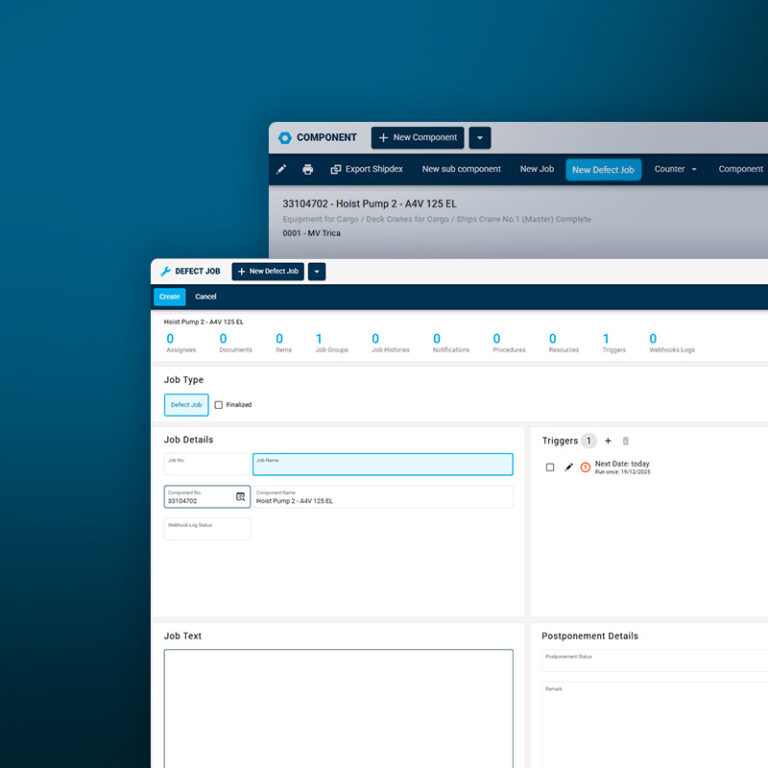
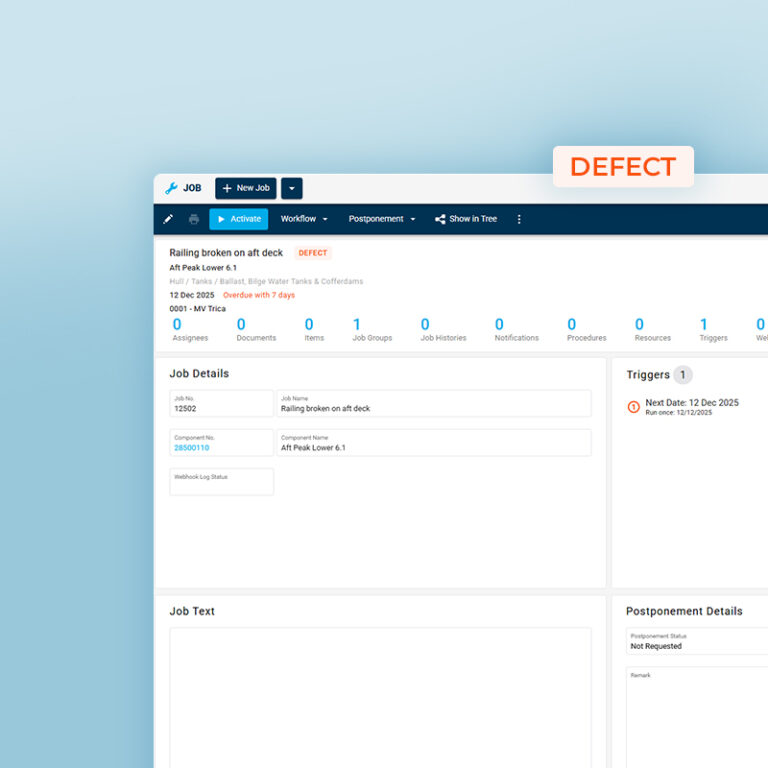
The SERTICA Defect Reporting module provides a simple, structured process for these situations. When a defect is discovered, a Breakdown Job is created directly on the affected component in SERTICA. This immediately places the issue into a dedicated workflow for unplanned work, separate from planned maintenance, and visible to both vessel and office teams.
This ensures every unplanned job is properly documented, tracked, and managed from discovery to resolution, so the crew knows the issue is acknowledged, and the office has a clear, real-time overview of what needs attention.
Key Features
SERTICA Defect Reporting Capabilities
This module gives you a straightforward way to report issues accurately and follow their progress, reducing the need for follow-up calls, emails, and repeated explanations.
Direct Component Reporting
Create a defect job directly from the component screen, automatically linking equipment data. This saves reporting time and ensures the office receives the correct technical context.
Dedicated Defect Workflow
Unplanned jobs are handled in a dedicated workflow, keeping them separate from routine tasks. This helps crews focus on urgent issues and allows fleet teams to prioritize correctly.
Categorization & Prioritization
Assign categories, severity, and priority to each defect to ensure consistent evaluation and clear escalation of urgent issues.
Link to Requisitions
Link defect jobs directly to requisitions or service orders, giving procurement and technical teams visibility of required parts or services without extra follow-up.
Transparent Status Tracking
Maintain an overview of reported defects, their status, and expected rectification times, supporting clear communication and better planning.
Complete Job History
All actions are logged in a searchable job history for each component, supporting smooth handovers and avoiding repeated reporting.
Compliance and data integrity
Strengthen compliance and turn defects into data
This detailed defect history is essential during inspections and audits, where inspectors expect to see how a defect was identified, assessed, followed up, and closed. Properly documenting deficiencies is a key requirement of industry standards such as TMSA, and the module ensures every defect is handled through a consistent, auditable process, from discovery on board to rectification and close-out.
At the same time, each defect report contributes to fleet-wide reliability insights. Because defects are logged against specific components with structured data, technical teams can identify recurring failures, evaluate repair effectiveness, and calculate key metrics such as MTBF (Mean Time Between Failures). This supports informed maintenance decisions, helping prevent repetitive breakdowns and reduce operational disruption on board.
Benefits
Why teams choose PunchOut
- NEVER MISS A DEFECT
All defects stay visible until resolved
Unplanned jobs are centralized in one workflow, preventing lost emails or notes. Crews can trust that reported defects are tracked, while the office keeps a complete overview.
- FASTER RESOLUTION
Quicker action on critical issues
Defects link directly to procurement and service planning, giving shore teams immediate visibility and reducing response times for the crew.
- IMPROVE RELIABILITY
Decisions based on real defect data
Analyze defect trends and MTBF to identify root causes, reduce repeat failures, and support more reliable vessel operations.
TARBIT Shipping Customer Case
Defect reporting as a driver for improvement
Tarbit Shipping has changed their approach and began prioritizing vessel condition over fear of defects. With the SERTICA Inspection App, observations are logged directly on the component, increasing the number of reported findings. By making defect reporting simple and aligning it with how the crew already work, Tarbit has turned defect reporting from a burden into a tool that supports continuous improvement across the fleet.
Frequently Asked Questions
SERTICA Defect Reporting
What makes a defect report different from a standard job in SERTICA?
A defect report is specifically for unplanned findings or breakdowns. While it uses standard job functionality, it is automatically routed into a dedicated defect workflow. This keeps urgent issues visible for both crew and office without cluttering planned maintenance lists.
How does the Defect Reporting module connect to procurement?
You can link any defect report directly to a requisition or service order with a single click. This makes required parts and services immediately visible to procurement and technical teams, while the crew can follow progress without separate communication.
Can I analyze trends with the data from each defect report?
Yes. All defect data is available in SERTICA Analytics, enabling trend analysis, repair time evaluation, and cost breakdowns by vessel, system, or component. This supports a proactive reliability strategy across the fleet.
What kind of documentation can we add to a defect report?
You can add multiple attachments, including photos, technical documents, and notes, to each defect report. This ensures that everyone – from the next watch to shore-based teams and service engineers – has the same context.
How does Defect Reporting support compliance with standards like TMSA?
The module provides a formal and auditable process for managing deficiencies, ensuring every defect is documented, tracked, and resolved in line with industry standards such as TMSA.
How do we track the progress of a defect report in SERTICA?
Each defect report has a clear status, owner, and due date. Both vessel and office teams share the same real-time view, ensuring crews know when action is taken and managers can keep accountability clear.