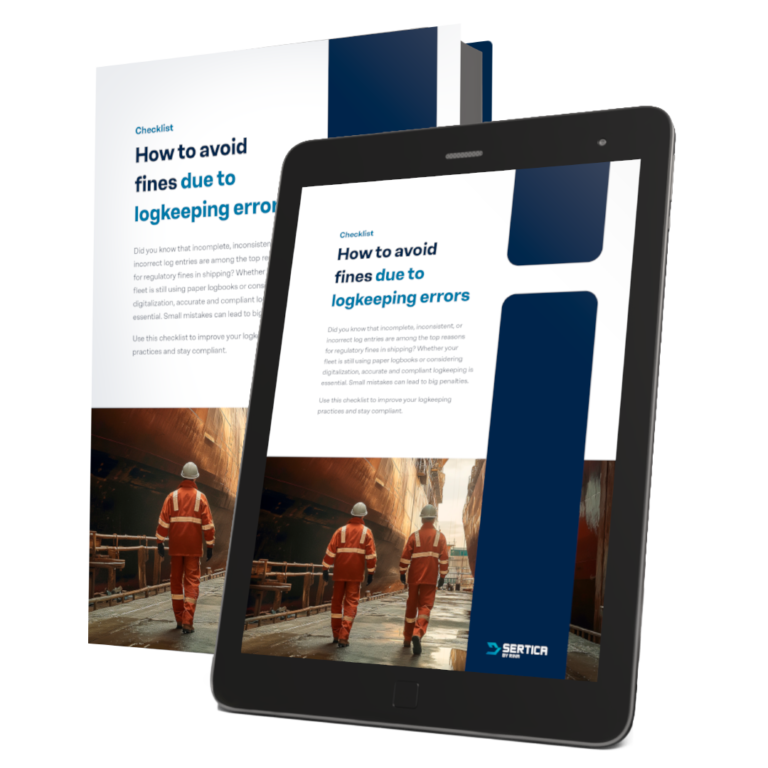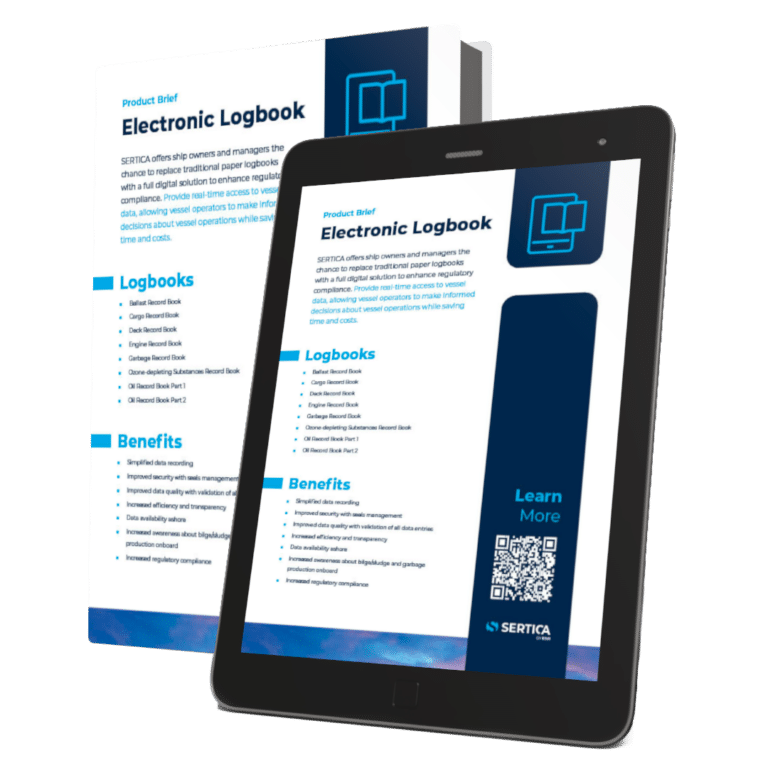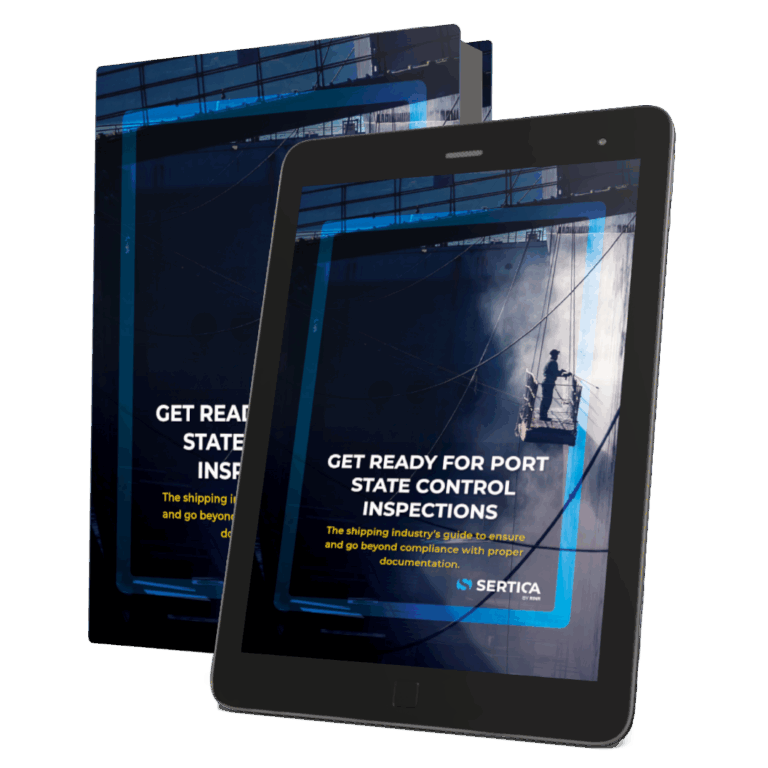
Go completely paperless and never lose data
Have all your data available and easily create overviews, no need to browse through endless pages.
Stay compliant with IMO, MARPOL and SOLAS regulations
Ensure your vessel is always inspection ready with structured, regulation approved logbook records.
Have all records available for controls
Make port state controls faster and more efficient with less prep time for your crew. All records sorted and ready.
Overview
Electronic Logbook is designed for the maritime sector to reduce paper storage onboard and enhance regulatory compliance. The software is capable of fully replacing the paper copy of logbooks, reducing paperwork on board, enhancing the reliability of the records, and their compliance with international regulations.
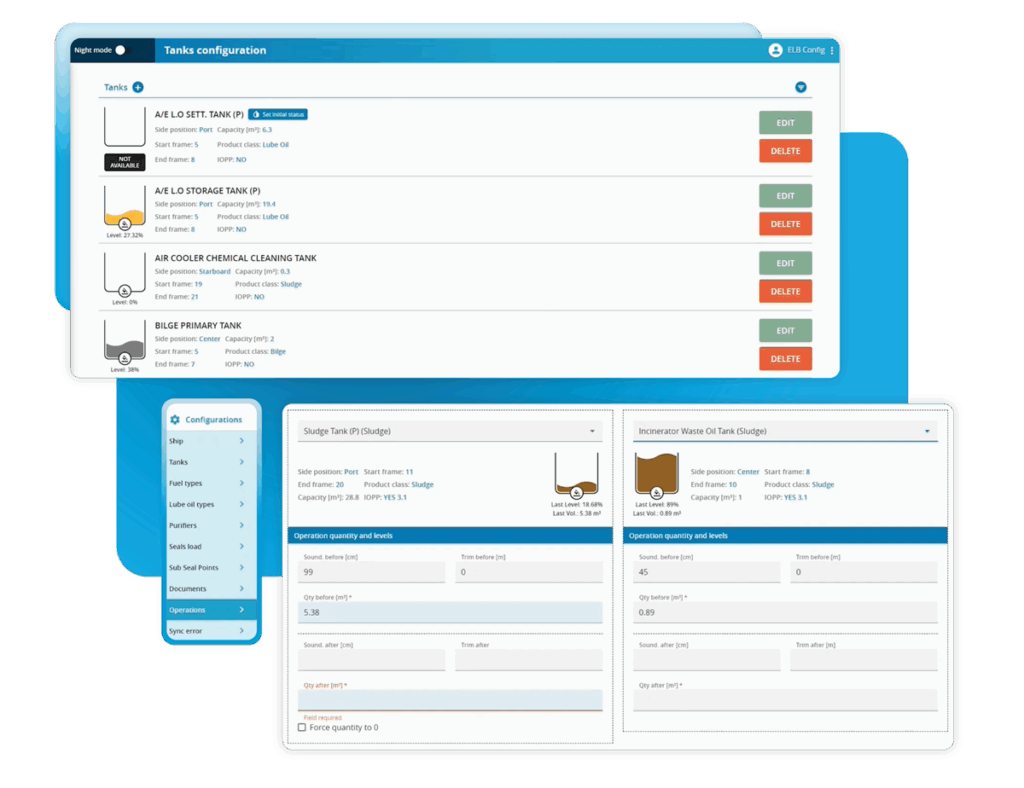
Configurable e-logbooks
Configure your vessel to streamline data recording and reduce crew workload in SERTICA’s maritime electronic Logbook. By defining vessel-specific elements such as tank arrangements, fuel types, purifiers, seals and documents, the system displays only the relevant fields during logbook entries. Improving accuracy and supporting consistent, compliant recording across the fleet.
Available logbook configurations include:
e-Logbook accountabilty
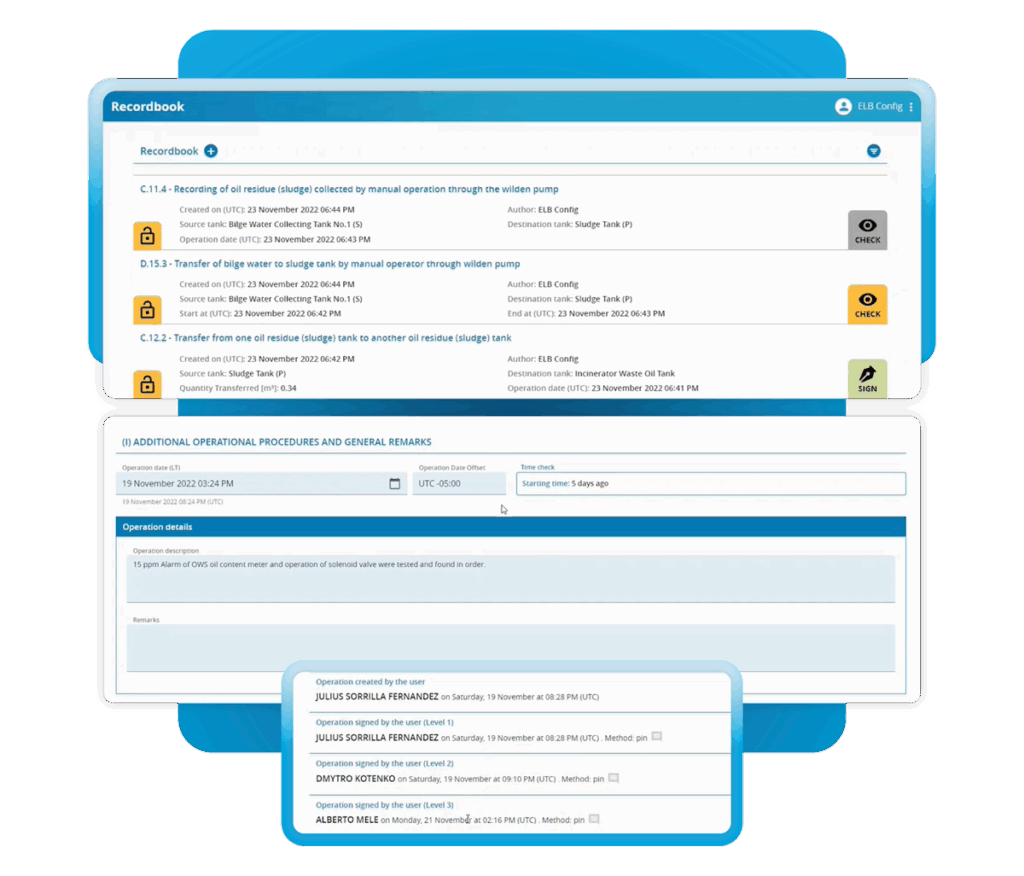
Manage access to electronic logbooks with role-based access control. Through user authorizations you ensure which users can create, edit, or verify entries. Each action is linked to a personal login and PIN, providing full accountability for records.
All entries must meet validation criteria before they can be saved, including completeness checks and automatic UTC timestamping. Combined with multi-level signature workflows and detailed audit logging, this structure supports secure, transparent, and compliant recording across all electronic logbooks.
Unique role-based access with automatic timestamps ensure accountability for transparent logbooks and regulatory compliance.
Logbook insights
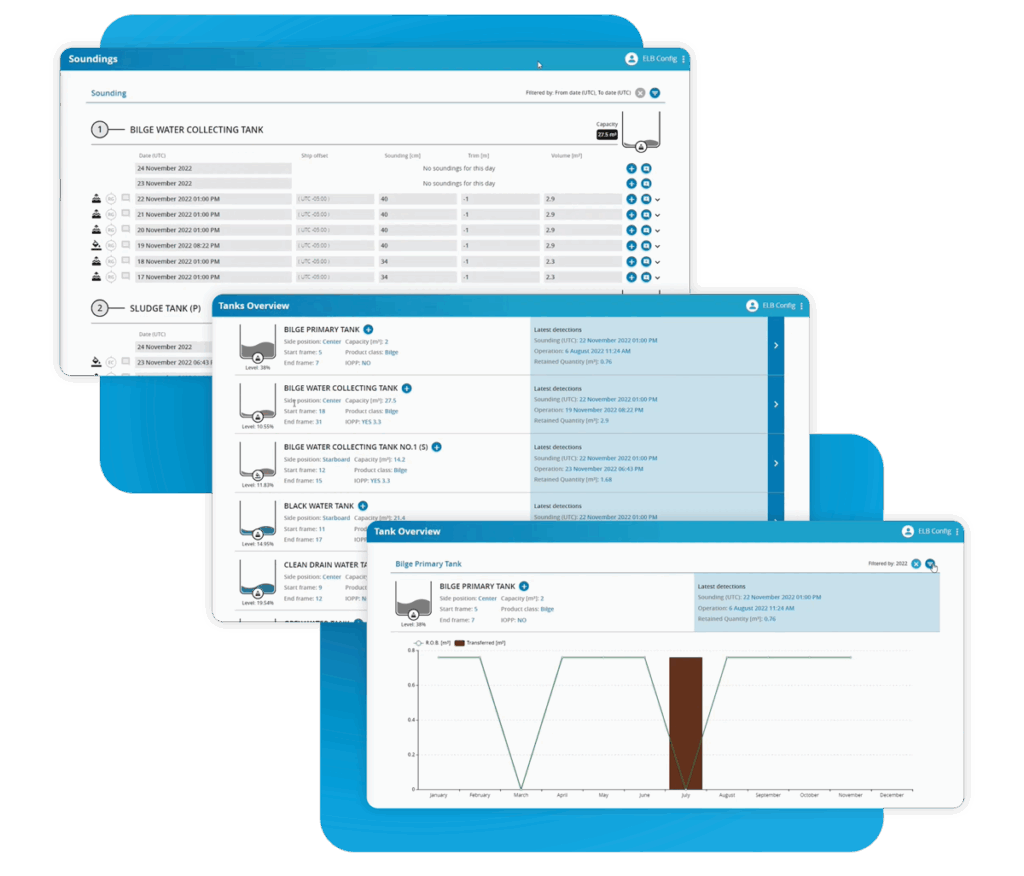
Access a full overview of both current and historical logbook data in one structured system. Instead of sorting through spreadsheets or paper records, you can now visualize key activities, track trends, and compare performance across vessels directly from the electronic logbook.
With built-in quality checks and sequenced entries, your data stays consistent, accurate, and ready to support smarter decisions at sea and ashore.
Logbook seals
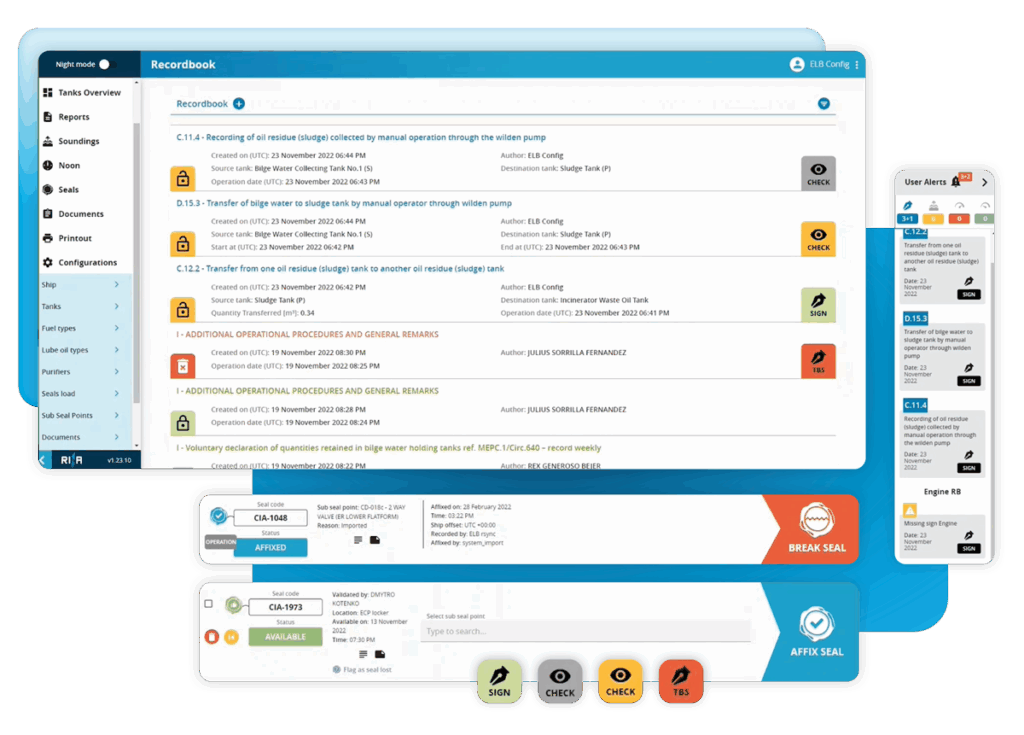
With electronic Logbook, sealed operations are fully traceable. Each seal application or removal is recorded with time, user, and purpose, giving both onboard and shore teams immediate visibility into critical actions.
The system also provides a clear overview of operations awaiting signature or verification. Users can track which entries are pending, who is responsible, and which steps remain, ensuring that all records are complete and compliant before inspections or port arrival.
The seal functionality improves control, reduces oversights, and ensures secure, verifiable workflows across all vessels.
Introduction
SERTICAs electronic Logbook replaces paper-based records with a secure, compliant, and digital solution. As a web-based maritime E-logbook, it ensures consistent and accurate logbook recording, accessible to both ship and shore.
Avoid the risk of data manipulation and loss tied to paper logbooks. With API integration, your maritime digital logbook becomes a connected part of your wider fleet management system.
System
Choose only the modules you need, no unnecessary add-ons. The electronic Logbook for ships requires no onboard training and is easy to implement across your fleet. Use the system to collect, manage, and analyze vessel data – all in one platform.
Testimonials
The electronic Logbook for ships help crews and operators maintain accurate, compliant logbook recording, ensuring readiness for inspections today and adaptability to future.
Accurate and transparent record keeping is of paramount importance and digitalization is a necessary step towards achieving company goals and optimizing the crew’s workload.

Capt. Bernd Schlarmann,
Fleet Manager

Thanks to the electronic Logbook, we have now a clear picture of the production of bilge, sludge, and garbage, and so we have the possibility to budget in a proper way the waste disposal ashore.

Cesare D’Api,
Deputy Technical Director
Maritime businesses digitalizing their logbooks with SERTICA
Approvals
SERTICA electronic Logbook is approved by the most important Flag State Authorities. Get a full overview of which countries have approved which logbooks in our approval list.
| Country | ORB-I | ORB-II | Cargo RB | Garbage RB | Ozone RB | Ballast RB | Deck RB | Engine RB | Radio RB | Fuel RB |
|---|---|---|---|---|---|---|---|---|---|---|
| Antigua & Barbuda | ||||||||||
| Australia | ||||||||||
| Bahamas | ||||||||||
| Bahrain | ||||||||||
| Barbados | ||||||||||
| Belgium | ||||||||||
| Belize | ||||||||||
| Bermuda | ||||||||||
| Brazil | ||||||||||
| British Virgin Islands | ||||||||||
| Cayman Islands | ||||||||||
| Chile | ||||||||||
| Cyprus | ||||||||||
| Denmark | ||||||||||
| Estonia | ||||||||||
| Faroe Islands | ||||||||||
| Finland | ||||||||||
| France | ||||||||||
| Georgia | ||||||||||
| Gibraltar | ||||||||||
| Guernsey | ||||||||||
| Hongkong | ||||||||||
| India | ||||||||||
| Indonesia | ||||||||||
| Isle of Man | ||||||||||
| Jersey | ||||||||||
| Kiribati | ||||||||||
| Latvia | ||||||||||
| Liberia | ||||||||||
| Luxemborg | ||||||||||
| Malta | ||||||||||
| Marshall Island | ||||||||||
| Nauru | ||||||||||
| Netherlands | ||||||||||
| Niue | ||||||||||
| Norway | ||||||||||
| Palau | ||||||||||
| Panama | ||||||||||
| Portugal | ||||||||||
| St. Vincent & the Grenadines | ||||||||||
| Singapore | ||||||||||
| Sweden | ||||||||||
| Switzerland | ||||||||||
| Turkey | ||||||||||
| Tuvalu | ||||||||||
| United Kingdom | ||||||||||
| Vanuatu |
Our list is continually updated as we gain more approvals.
Benefits
SERTICA electronic Logbook transforms maritime logbook recording from a manual, fragmented process into a unified digital system that improves accuracy, ensures accountability, and strengthens daily operations. By replacing paper-based routines with a secure and connected platform, you gain full control of your records, onboard and ashore.

Move from handwritten records to structured, compliant data
SERTICA transforms logbook records from a manual task into a reliable, digital process that enhances transparency and operational control. By removing paper-based errors and delays, your team can focus on safety, compliance, and efficiency, onboard and ashore.
From data entry to data leadership.
Electronic Logbook provides a structured overview of all recorded activities, giving both onboard and shore-based teams access to reliable, validated data. Each entry is timestamped, categorized, and stored in a way that supports easy retrieval and cross-vessel comparison.
This enables operators to identify trends over time, detect deviations from standard procedures, and gain a deeper understanding of key areas such as fuel efficiency, sludge production, and ballast water management. With consistent and accurate data as a foundation, shipping companies can move beyond compliance and use their logbooks as a tool for operational analysis and performance improvement.
Whether used alone or integrated with business intelligence tools, the system supports data-driven decisions that improve transparency and strengthen daily operations across the fleet.
Embrace digital efficiency without changing how you operate
Shifting to electronic logbooks doesn’t mean abandoning familiar routines. With SERTICA Logbook, you gain the efficiency and structure of digitalizing your record keeping with electronic logbooks, while still having the option to generate compliant, printed logbooks whenever needed.
Verified entries can be exported in a format identical to traditional hardcopies, ready for handover during inspections or internal use. This gives your crew the tools to work smarter, while maintaining the flexibility to meet operational and regulatory demands without disruption.
It’s a digital transition designed to support your way of working, not replace it.
From isolated paperwork to shared operational awareness
Make your logbook entries available in real time, so both onboard and shore teams can stay aligned throughout every operation. Eliminate the risk of missing, damaged, or delayed records, and ensure that critical information is always accessible when needed.
Unlike paper logbooks, digital records can’t be lost, damaged, or misplaced. Everything is stored securely, backed up automatically, and ready when you need it, whether for internal review or port inspection.
We support you every step of the way
Project Manager
One reliable point of contact from start to finish
Active support
Gain success with our live support and customer success manager.
Industry experts
Developed inhouse by marine experts in collaboration with maritime customers.
Insights
Explore every aspect of maritime electronic Logbook through expert papers, webinars, live demos, and customer cases designed to help you stay compliant for regulatory inspections.
TAKE CONTROL OF YOUR FLEET WITH SERTICA
Discover everything SERTICA has to offer and learn more about our full product range. All SERTICA products integrate with each other, providing your fleet with a complete and comprehensive management system.
FAQ
A maritime electronic logbook is a digital system used onboard ships to record operational activities such as fuel consumption, oil transfers, ballast water management, and waste handling. It serves the same purpose as traditional paper logbooks but offers significant advantages in terms of compliance, accuracy, and efficiency.
Here is how a maritime e-logbook stands apart from the traditional approach:
Accuracy and Compliance
A maritime digital logbook guides users through standardized entries with built-in validations, minimizing errors and ensuring compliance with international regulations like MARPOL. Incorrect or incomplete log entries often seen in paper books can be avoided with structured digital input.
Simplified Port State Control Inspections
During Port State Control (PSC) inspections, quick access to properly maintained records is critical. Electronic logbooks make it easier to retrieve and verify data, reducing the risk of deficiencies and detainment.
Real-Time Data Access
Unlike paper logs, maritime e-logbooks allow real time access to records, both offshore and in the office. This supports immediate decision-making, proactive compliance monitoring, and more effective fleet oversight.
System Integration
Modern electronic logbooks can integrate with onboard systems like environmental controls, maintenance, and fuel monitoring. This creates a centralized platform for data collection and performance tracking.
Less Paperwork, More Productivity
By reducing the time spent on manual entries and paperwork, digital logbooks help crews focus on safe operations. They also make audits and compliance reviews easier for shore-based personnel.
In Practice
Solutions like SERTICA Logbook provide all these benefits while ensuring full alignment with IMO conventions and flag state requirements. Designed for real-world maritime operations, they offer structured, secure, and fully compliant electronic logging capabilities.
Transitioning from traditional paper logbooks to electronic logbooks (ELBs) is a strategic move toward digital, compliant, and data-driven ship management. The following points outline key considerations to ensure a smooth and successful conversion:
Regulatory Compliance
Any electronic logbook system must be accepted by your flag state and aligned with international maritime conventions such as MARPOL and SOLAS. The SERTICA maritime electronic Logbooks are designed with compliance at their core, helping shipowners meet and exceed current regulatory expectations.
Data Retention and Migration
Consider if you want to start fresh with electronic entries, keeping old logbooks in paper and recording new entries digitally, or if you and to digitalize historical data. Digitalizing historical data takes time, but makes data retrieval and dashboards quicker and more effective from the beginning. Also consider recordkeeping mandates during audits and inspections, which vary depending on the record and the mandate, though they commonly range from 3-5 years.
Crew Training and Onboard Adoption
A successful transition depends on crew engagement and understanding. Set aside time for crew training, as clear procedures, intuitive interfaces, and practical training are essential. SERTICA Logbook is developed with ease of use in mind, helping crew record operations correctly while supporting onboard knowledge transfer.
System Reliability and Connectivity
Electronic logbooks on ships should function reliably both online and offline, with automatic data synchronization when connections are available. Ensure that the system you select supports both. SERTICA Logbook provides full offline capability, ensuring seamless operations even in low-connectivity environments, while maintaining data integrity across ship and shore.
Performance and Efficiency Gains
Beyond compliance, electronic logbooks reduce manual paperwork, minimize errors, and enhance the visibility of onboard operations. With SERTICA Logbook built-in dashboards and analytics, data can be transformed into actionable insights, supporting continuous improvement in safety, compliance, and environmental performance.
Yes, electronic logbooks are fully legal under MARPOL, provided they are approved by the ship’s flag Administration and fulfills the MARPOL electronic logbook requirements.
SERTICA Logbook fulfills all MARPOL and IMO requirements, and is approved by numerous flag states, view these under approvals.
Legal
As of 1 October 2020, amendments adopted by the IMO (Resolutions MEPC.314(74), MEPC.316(74), and MEPC.317(74)) permits the use of Electronic Record Books (ERBs) as legal substitutes for traditional paper logbooks across MARPOL Annexes I, II, V, and VI, as well as the NOx Technical Code.
Electronic logbooks may be used on board to meet the following record book and recording requirements under the MARPOL Annexes and the NOx Technical Code:
To be compliant, an digital logbook must meet the technical and security requirements set out in the IMO’s official Guidelines for the Use of Electronic Record Books under MARPOL (MEPC.312(74)). This includes proper data security, audit trails, role-based access, backup procedures, and the ability to print signed, tamper-proof copies for inspection or legal proceedings.
Port State Control (PSC) officers inspect ships to verify compliance with international maritime regulations, focusing on safety, environmental standards, and proper documentation. They typically check certificates, past inspection reports, crew qualifications, and crucially, the ship’s official logbooks, especially the Oil Record Book. Errors in these records are among the most common reasons for detentions.
Maritime logbooks commonly include:
This is where digitalization plays a key role. Electronic logbooks help reduce human error by guiding users through correct data entry formats and ensuring signatures, dates, and codes are always properly recorded. E-logs also allow for easier access and sharing of documentation between ship and shore, which speeds up inspections and increases transparency. By switching to digital records, ships can avoid unnecessary delays, lower the risk of detentions, and maintain a clear, compliant audit trail.
To learn how to get ready Port State Control inspections read our paper.

Project Management
Customer Success
Training
Support
3rd Part Integration
Data Conversion
SERTICA Cloud