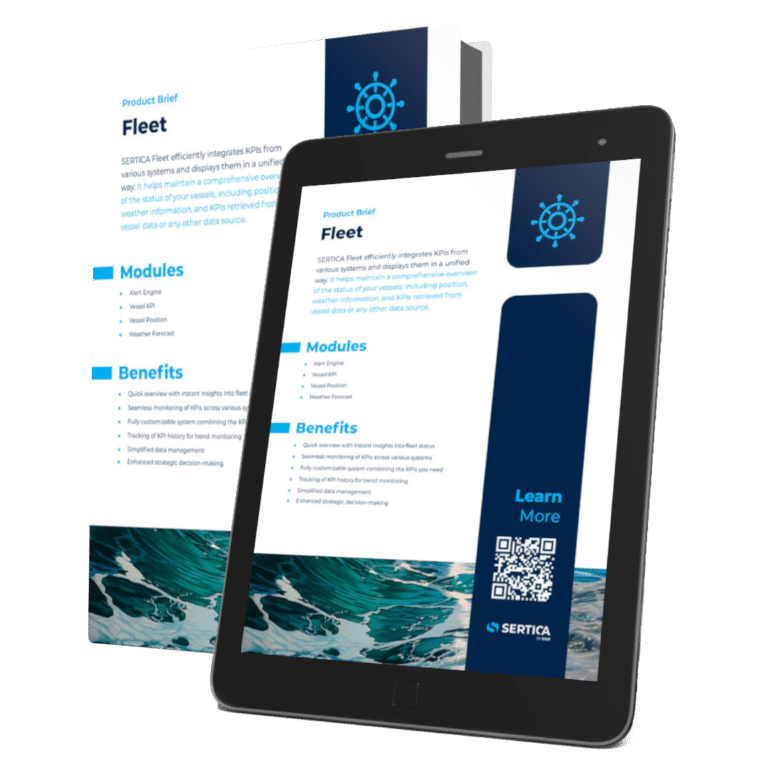
Zero blind spots
Know every vessel’s status at a glance, spot issues early, and keep voyages on plan.
Act sooner rather than later
Turn small deviations into quick corrections to cut delays and off-plan hours across the fleet.
Lead with trusted numbers
Align ship and shore around shared KPIs, shorten reviews, and scale what works.
Overview
SERTICA Fleet gives you one clear picture across all your systems, ending the back-and-forth between tools and teams. As a fleet monitoring system, it brings KPIs together in a single, trusted view so ship and shore align faster, spot issues sooner, and make confident decisions.
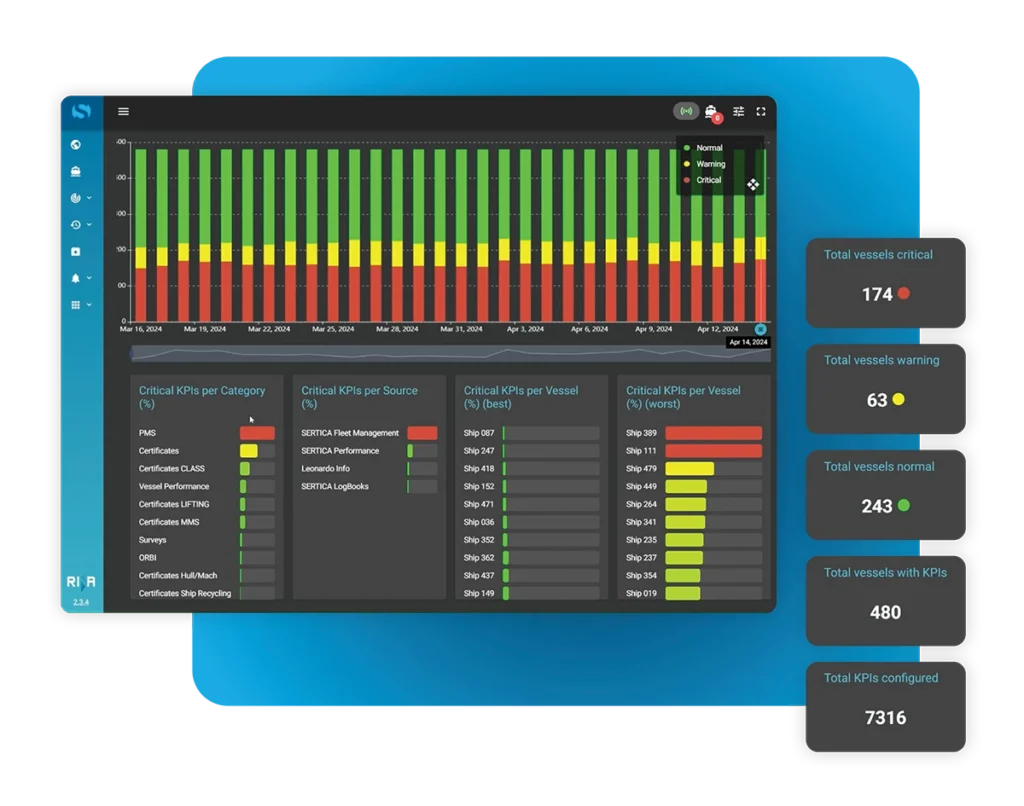
FLEET VISIBILITY
Start with one reliable picture for modern fleet monitoring. SERTICA Fleet brings an overview of all vessels, live positions and KPI status into a single interface, with AIS tracking and optional weather forecast and hindcast enrichment for context. Daily checks take minutes with the same view shared across departments.
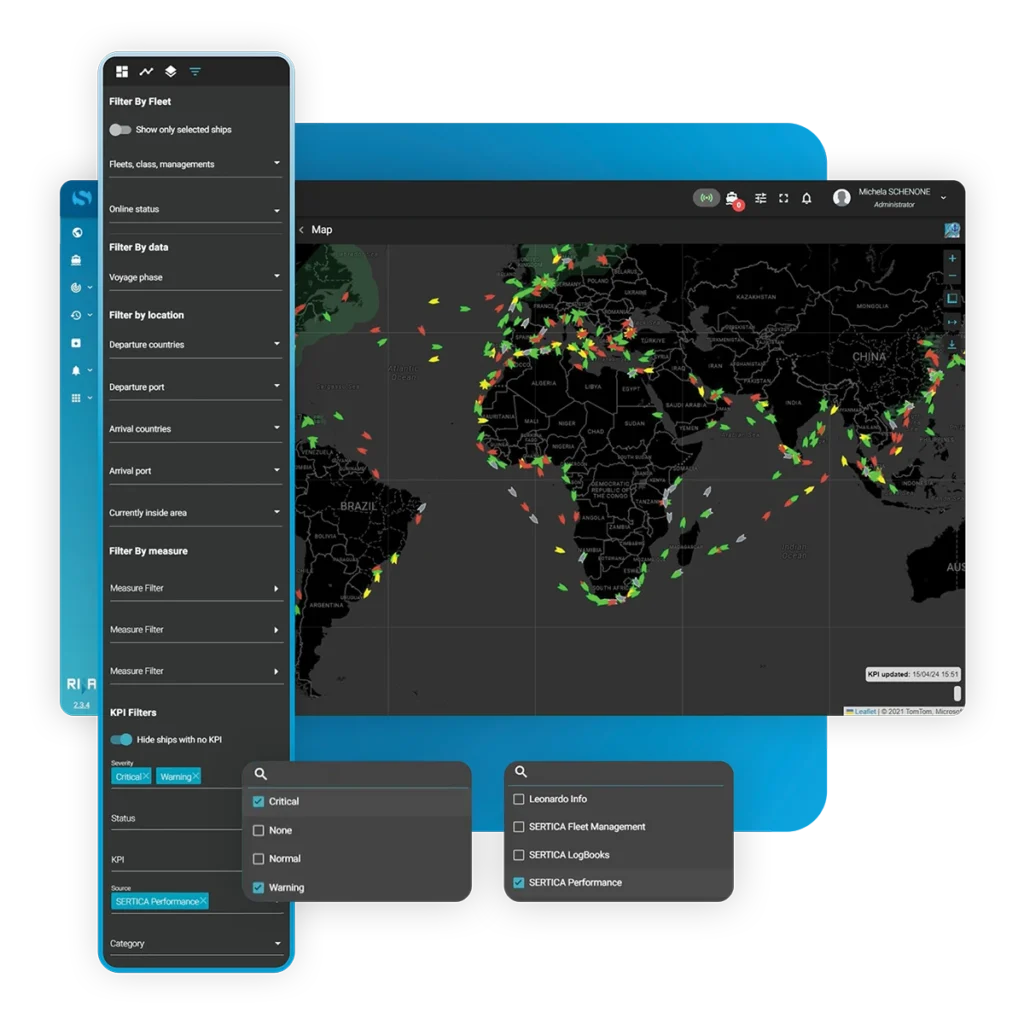
FOCUS & FILTERS
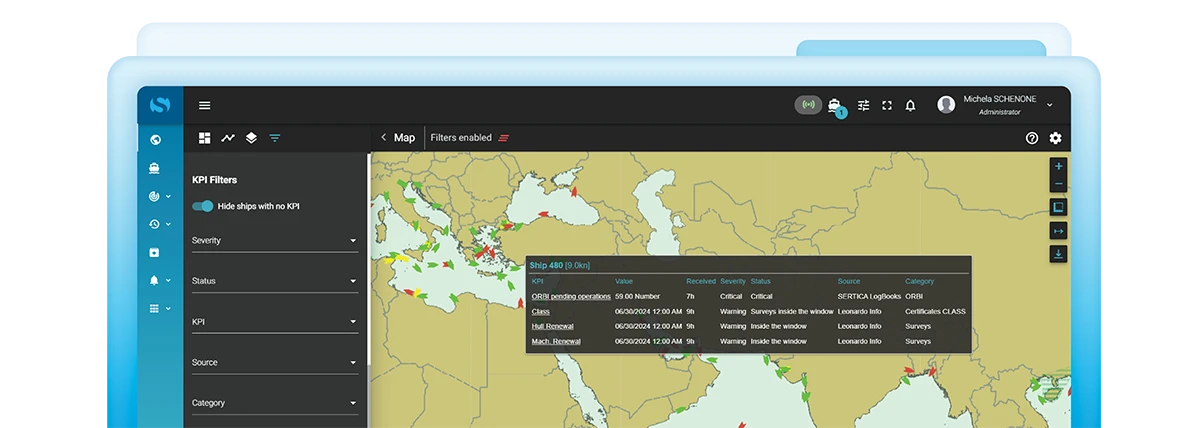
Cut the noise with powerful filters and advanced map visualization. Focus the map on specific vessels, statuses or information types, or group by category to see only what you need. SERTICA’s open API consolidates KPIs from SERTICA and external systems, no re-entry, no data silos.
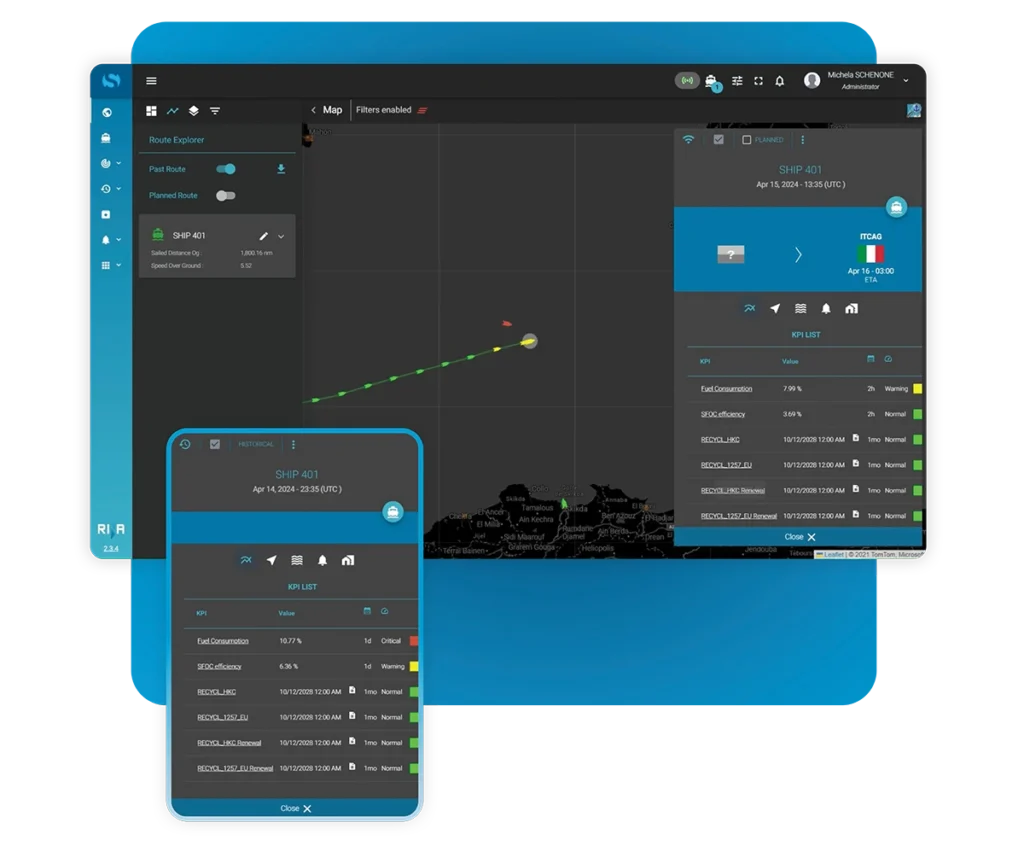
VESSEL DEEP DIVE
Move from the big picture to details in one click. Each vessel page shows a live status panel, recent track, and a complete KPI overview with thresholds, plus source references so everyone understands each metric. KPI configuration lets you define what “good” looks like for your fleet, and role-based access keeps views relevant.
CUSTOM ALERTS
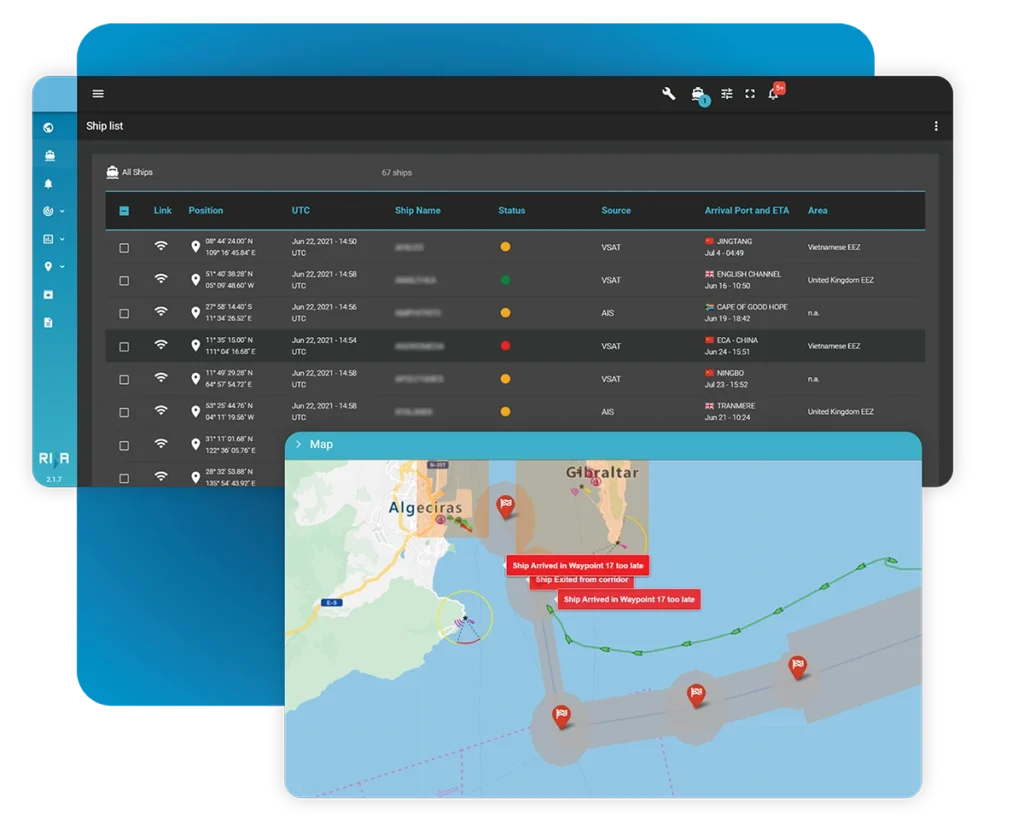
Replace manual check-ins with timely, targeted alerts. Configure rule engines that trigger on KPI thresholds, areas or statuses; flag arrivals and other events in near real time via AIS or high-frequency data; and route them by role and priority. Analytics and an alert trail support follow-up, accountability and cross-department sharing.
Introduction
When vessels, departments, and vendors speak different data languages, decisions are slow and small issues turn into lost time and cost. SERTICA Fleet gives you a single, shared operating picture, so the answer to “what’s happening across the fleet?” is clear in minutes, not after a chain of calls and emails.
Built for modern operations, it pulls KPIs through standard APIs (SERTICA and third-party), refreshes positions in near real time, and presents role-specific views with an auditable trail of actions. The result: Faster alignment, quicker course-corrections, and reporting you can stand behind.
System
The core Fleet system gives you a holistic picture of fleet data with all the KPIs you need. See only what matters through powerful filters, then drill down from fleet to vessel to inspect single data sources and get fast, actionable insight.
Benefits
With SERTICA Fleet, you turn scattered data into momentum. Faster answers replace call chains, risks surface earlier, and shared KPIs keep ship and shore moving in sync. The result is fewer surprises, audit-ready operations, and wins that scale confidently across every vessel.

Turn a fragmented operation into one coordinated fleet
A modern fleet monitoring system gives leaders and operators a single operating picture that speeds decisions and makes best practice repeatable across vessels. With KPIs front and center and role-based fleet dashboards, fleet monitoring for ships aligns bridge and shore around the same facts.
Cut call chains. Move from question to action in minutes
Status shouldn’t live in ten places. The fleet monitoring platform centralizes what matters so the answer to “what’s happening across the fleet?” is immediate and the next steps are obvious. Daily checks become a two-minute scan using saved views, AIS fleet tracking, and a concise fleet KPI dashboard
Stay audit-ready without the scramble during inspections
Compliance gaps usually surface late. With fleet monitoring for ships, certificate expiry tracking and arrivals sit next to operational KPIs in one readiness view, so risks are visible early and follow-up is documented. Targeted geofencing prompts help crews keep discipline day to day, while an audit trail shows who did what and when, making port calls and reviews routine.
Integrate once. Access from anywhere, anytime
Re-entry and spreadsheets hide risk. SERTICA Fleet uses an open maritime API to pull KPIs from SERTICA and third-party tools into a single vessel KPI view. Each department gets relevant context in role-based dashboards, while leadership sees the whole picture for confident, timely decisions.
We support you every step of the way
Project Manager
One reliable point of contact from start to finish
Active support
Gain success with our live support and customer success manager.
Industry experts
Developed inhouse by marine experts in collaboration with maritime customers.
Insights
Explore practical resources to master fleet monitoring for ships from KPI playbooks to webinars. Learn proven ways to roll out adoption across ship and shore.
TAKE CONTROL OF YOUR FLEET WITH SERTICA
Discover everything SERTICA has to offer and learn more about our full product range. All SERTICA products integrate with each other, providing your fleet with a complete and comprehensive management system.
FAQ
Fleet monitoring is the ongoing collection, consolidation, and visualization of fleet-wide data: vessel positions, events, and KPIs. So ship and shore operate from one shared picture. A modern fleet monitoring system surfaces exceptions (e.g., standstill, late arrivals, certificate risks), supports role-based follow-up, and makes good practice repeatable across vessels. In SERTICA, this comes to life as an all-vessels view plus a configurable fleet KPI dashboard for leaders and departments. See examples in Fleet and Vessel KPI.
A fleet monitoring system works by data flowing from ships and shoreside systems into one platform where it is standardized and organized per vessel, then shown in role-based dashboards.
AIS fleet tracking and weather add operational context; configurable rules and alerts highlight what needs attention in near real time where sources support it. Users can filter by vessel/status, save and share views for recurring checks, and drill down to a single ship’s track and KPIs when needed. Explore components: Vessel Position, Weather Forecast, Alert Engine.
For day-to-day planning, supplement with other systems, such as adding Voyage, and for deeper analysis and benchmarking, see Advanced Analytics.
Maritime fleet monitoring supports compliance through compliance items, such as certificate and survey validity, arrival notices and policy prompts live alongside operational KPIs, so risks are visible early and follow-ups are documented.
Geofenced prompts help crews apply rules consistently (e.g., fuel type reminders on ECA entry), while an acknowledgement trail with activity logs shows who did what, and when useful for audits and internal reviews. See related capabilities in HSQE and the Geofencing & Rules Editor.
KPIs are individual to each companies specific goals and processes. Although we can make some generalizations. Most fleets start with four groups:
Readiness: certificates and surveys due, inspections upcoming, master data completeness.
Operations: arrivals and ETAs, standstill time, off-hire indicators, port turnaround.
Performance: fuel-related indicators and machinery KPIs ingested from connected tools.
Backlog: overdue maintenance jobs, critical spares below threshold.
KPIs are configurable by role and vessel, with clear thresholds, status colors (Normal/Warning/Critical), and source references so everyone knows where numbers come from. Learn more in Vessel KPI, or explore further options with Advanced Analytics.
The implementation of SERTICA Fleet focuses on connecting sources, configuring views, and aligning roles:
Connect data via standard/open APIs from SERTICA apps and approved third-party systems.
Configure KPIs, thresholds, and role-based dashboards; create saved views for recurring checks (fleet, region, department).
Contextualize with AIS/weather feeds and set rules/alerts that fit your policies.
Pilot, train, and rollout, typically starting with a subset of vessels and expanding quickly once views are agreed.
You will not be doing it alone. SERTICA supports your implementation process and throughout your entire journey with your personal project manager and an entire inhouse team for our services.
For most setups, SERTICA Fleet runs shoreside only, no bridge installation, because it consumes data you already collect (reports/logbooks, AIS, and shoreside systems).
Which means you can begin monitoring your fleet instantly with SERTICA Fleet, bypassing the need for cumbersome onboard installations. You simply access our API documentation to understand how to connect and share data efficiently.
If you want high-frequency signals beyond AIS/log entries, an optional Data Collector can capture and buffer data onboard and sync when connectivity allows, without adding work to the bridge. Read more: Data Collector, Vessel Reporting System, Logbook.
Data is handled in a secure cloud environment with encrypted transport, role-based access, and activity logging. Access can be scoped by department and vessel, so each user sees only what’s relevant, and actions are traceable for reviews. Where required, we can align to your organization’s identity/SSO and retention policies.
Fleet ingests KPIs from SERTICA applications and third-party maritime systems via open APIs, so you keep your existing tools while gaining one view for fleet monitoring for ships.
In practice, that can mean shoreside data from voyage reporting in Vessel Reporting System (VRS) and structured entries from the Logbook; technical follow-ups and backlog signals from Maintenance; fuel and machinery insights from Performance; manning and qualifications context from Crewing; and certificates, surveys and incidents from HSQE. When fleet status triggers sourcing or cost actions, related information can flow from Procurement to complete the picture without re-entering data.
To expose these signals as decision-ready KPIs, use Vessel KPI and where high-frequency inputs are needed capture and sync shipboard signals via the Data Collector

Project Management
Customer Success
Training
Support
3rd Part Integration
Data Conversion
SERTICA Cloud