
ONBOARD REPORTING
Built for the crew. Designed for the fleet.
Safety reporting only works when reports are actually filed. Yet near misses often go unreported when the process is complicated or time-consuming.
SERTICA Event Reporting makes it easy for the crew to identify and register events. From near misses and non-conformities to accidents and deficiencies, events are captured electronically in SERTICA with guided fields and optional documentation.
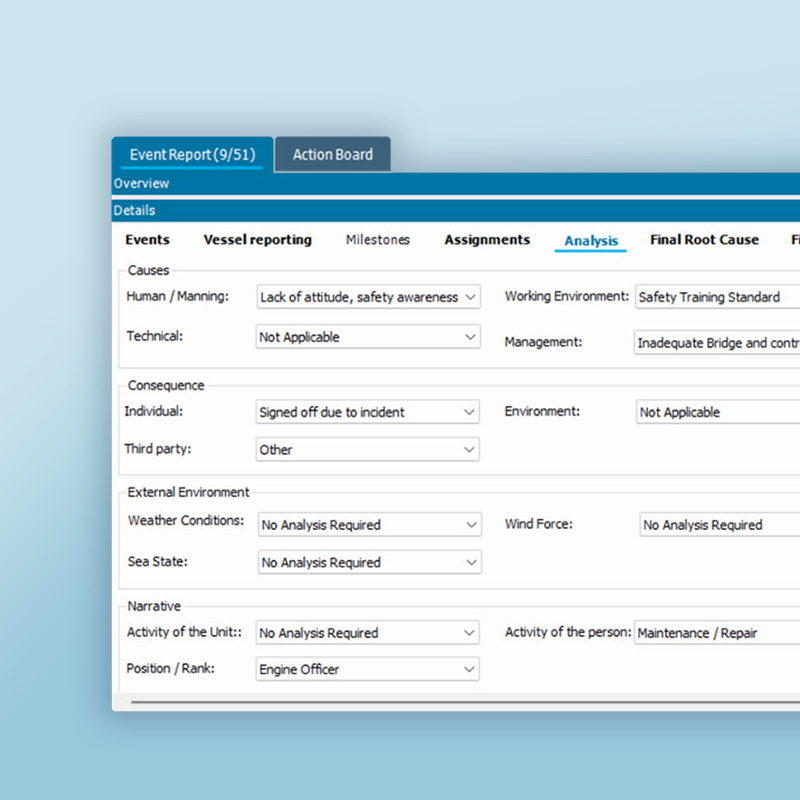
You decide which information must be included in each report, such as date, description, personnel involved, causes, and possible consequences. Corrective actions can be added onboard or later by the office.
Reports created by the crew are automatically synchronized with the office, where they can be reviewed and followed up on if more information is needed. Flexible status flows guide users through the process and ensure consistent, easy-to-analyze safety data across the fleet.
More about HSQE
Key Features
SERTICA Event Reporting Capabilities
Event Reporting is built around one idea: that every incident, observation, or near miss contains information your organization needs. You get structured crew reporting, automatic synchronization, flexible workflows tailored to your operation, integrated root cause analysis, and fleet-wide visibility that turns individual reports into patterns and patterns into prevention.
Event Overview
All events across the fleet are accessible to office personnel in a searchable and filterable overview. Monitor status, identify recurring issues, and take action before patterns develop into incidents.
Supporting Documentation
Enhance event reports with detailed descriptions and supporting evidence. Attach documents, images, or videos to provide context and improve the accuracy of incident documentation.
Flexible Status Flow
Reports created onboard sync automatically to the office. Status flows are fully configurable to match your workflows, guiding users from initial report through review, follow-up, and closure without relying on email or manual hand-offs.
Root Cause Analysis
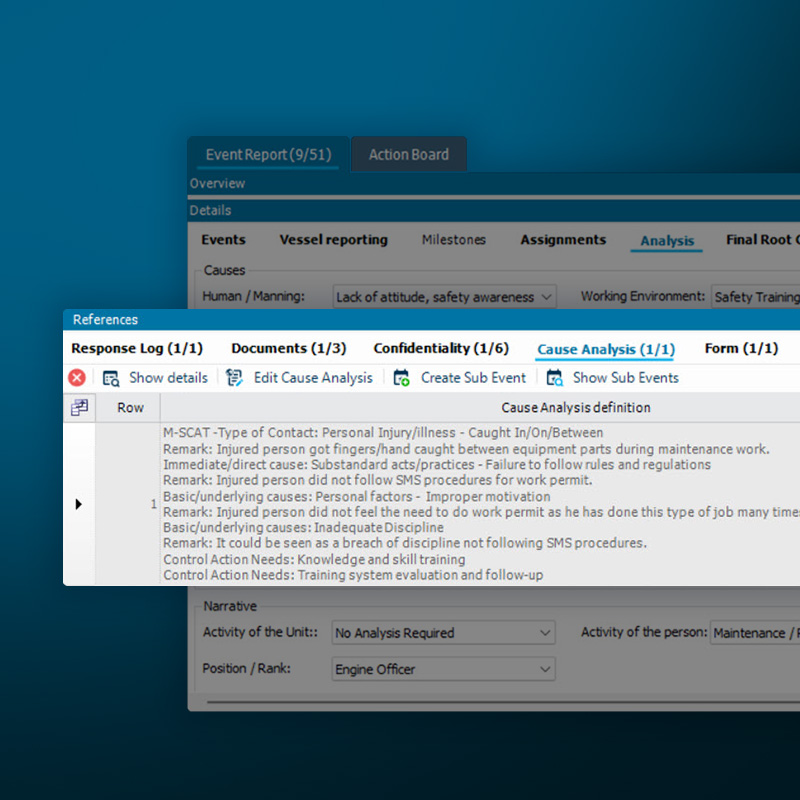
Investigate why an event occurred to identify underlying causes and implement effective corrective actions. Design and configure your own cause analysis models in the system.
Analytics Integration
Combined with SERTICA Analytics, you can generate reports to monitor trends, support inspections and vetting preparations, and comply with industry standards.
Event Types
Define the event types and mandatory fields to align with ISM, TMSA, SIRE 2.0, RightShip, Port State Controls, and other industry standards or regulations.
CAUSE ANALYSIS
Understand what happened and why with Cause Analysis
Without structured analysis, the same incidents tend to happen again.
Industry standards, including ISM, TMSA, and SIRE 2.0, require documented cause analysis for incidents and near misses, and SERTICA delivers it built in. Cause Analysis is integrated directly into the Event Reporting workflow, so investigations happen in the same system where events are reported, tracked, and closed.
Design your own cause analysis models or build established methodologies such as DNV’s M-SCAT, ABS Incident Investigation Model, TAPRoot, or 5xWhy by using SERTICA’s flexible configuration options. Corrective actions can be defined and linked to the event, ensuring that lessons learned are implemented and tracked.
More Modules
Benefits
Why teams choose Event Reporting
- AUDIT READY
Every event documented, every time
Maintain a consistent, auditable record of events, corrective actions, and closures across your fleet – aligned with SIRE 2.0, TMSA, ISM, RightShip, and Port State Control requirements and ready when the inspector arrives.
- RISK REDUCTION
Spot the pattern before it becomes an incident
Fleet-wide visibility and integrated root cause analysis give your HSQE team the tools to identify emerging risks early and take preventive action across the entire operation.
- SAFETY CULTURE
Make reporting a habit, not a burden
A reporting process simple to use means more near misses captured, more root causes identified, and a culture where incidents drive improvement rather than paperwork.
FAQ
Our experts answer the most frequently asked questions about SERTICA Event Reporting
What is an Event Reporting system in SERTICA?
SERTICA Event Reporting is a digital event reporting system that makes it easy for crews and office staff to report, track, and analyze incidents across the fleet. Events such as near misses, accidents, non-conformities, observations, and deficiencies can be registered directly in the system. All reports are stored in one structured environment, ensuring transparency, traceability, and consistent documentation throughout the organization.
How does the Event Reporting system support crew reporting onboard?
The system is designed to make event reporting simple and structured for the crew. Guided forms help users capture key information such as event description, time, personnel involved, causes, and potential consequences. Supporting documentation like images, videos, or documents can be attached directly to the report.
This ensures that events are documented clearly while keeping the reporting process quick and practical for daily vessel operations. By making reporting straightforward, the system helps capture more near misses and observations that would otherwise go unreported.
How are event reports shared between vessel and office?
Events reported onboard are automatically synchronized with the office through the SERTICA system. Office personnel can review reports, request additional information, assign corrective actions, and manage the status of each event. This creates a transparent workflow where both vessel and shore teams work from the same information and follow the same reporting process.
Can events be linked to other processes in SERTICA?
Yes. Event Reporting supports all functionality in combination with standard features in SERTICA. Events can be linked to maintenance tasks, procurement actions, or management reviews of the SMS manual. This creates a transparent and traceable audit trail – from the initial observation to corrective actions and preventive measures – ensuring that events lead to real operational improvements.
Can the Event Reporting system support industry standards and inspections?
Yes. The system allows you to configure event types, workflows, and mandatory fields to comply with industry standards such as ISM, TMSA, SIRE 2.0, RightShip, Port State Control, and class or flag state requirements.
By maintaining structured documentation and a clear follow-up process for every event, the system ensures that organizations are prepared for inspections, vetting processes, and audits at any time. This helps demonstrate a consistent and well-documented safety management process across the fleet.
How does root cause analysis work in SERTICA Event Reporting?
Root cause analysis is integrated directly into the Event Reporting workflow. Design and configure your own cause analysis models in the system. You can also build models such as DNV’s M-SCAT, ABS Incident Investigation Model, TAPRoot, and 5xWhy by using SERTICA’s flexible configuration options.
Combine the Event Reporting module with the Analytics module to create user-defined reports such as lists of open events or monthly lists of all events created across the organization. After identifying root causes, the system allows you to define corrective actions and link them to the event.