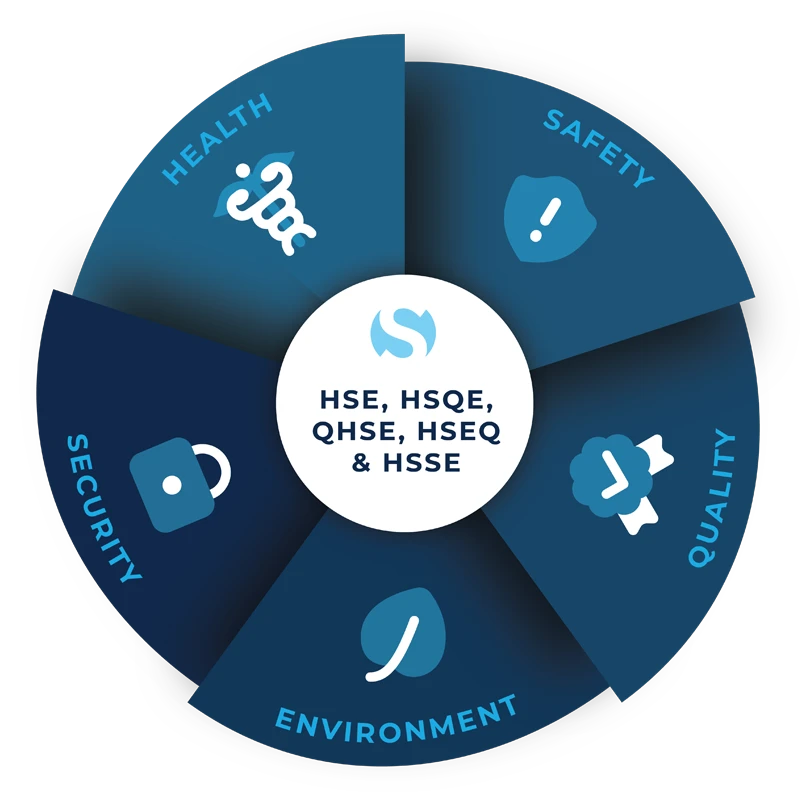
In the maritime industry, you have likely come across safety-related acronyms such as HSE, HSQE, HSEQ, HSSE, and QHSE. While they share a common goal – ensuring safe, efficient, and compliant vessel operations – the differences in their scope and emphasis can have an impact on your ship safety management approach.
SERTICA HSQE is designed to unify these elements into a digital Safety Management System (SMS) that ensures compliance, improves operational reliability, and supports continuous improvement.
What do the HSE, HSQE, HSEQ, HSSE, and QHSE acronyms mean?
| Acronym | Full Form | Explanation |
|---|---|---|
| HSE | Health, Safety, Environment | Focuses on the core elements of crew wellbeing, accident prevention, and environmental protection. Commonly used in maritime safety and compliance frameworks. |
| HSQE | Health, Safety, Quality, Environment | Emphasizes quality management and continuous improvement alongside health, safety, and environmental performance. |
| HSEQ | Health, Safety, Environment, Quality | Similar to HSQE, but with quality placed last, often used interchangeably depending on company structure or regional preference. |
| HSSE | Health, Safety, Security, Environment | Prioritizes security alongside traditional HSE concerns. Relevant for vessels operating in high-risk areas or under strict ISPS Code compliance. |
| QHSE | Quality, Health, Safety, Environment | Places quality at the forefront, typically in line with ISO standards and other international standards in shipping operations. |
The differences often reflect company focus, regional practices, or customer demands. Despite the differences, they all work toward the same objective: safeguarding people, assets, and the environment while maintaining operational excellence.
Key elements of ship safety management
Maritime operations are complex, high-risk, and highly regulated. To manage this complexity, shipowners need a Safety Management System that ensures consistent inspections, accurate reporting, and continuous improvement across the fleet.
Tarbit Shipping is a good example of this approach, having digitalized their ship safety management and streamlined inspections with SERTICA and the Inspection App:
How does SERTICA HSQE support your ship safety management?
SERTICA HSQE is built on integrated modules that support the implementation of your Safety Management System. The modules are designed to strengthen your health, safety, quality, environment, and security onboard.
Identify and prevent risks
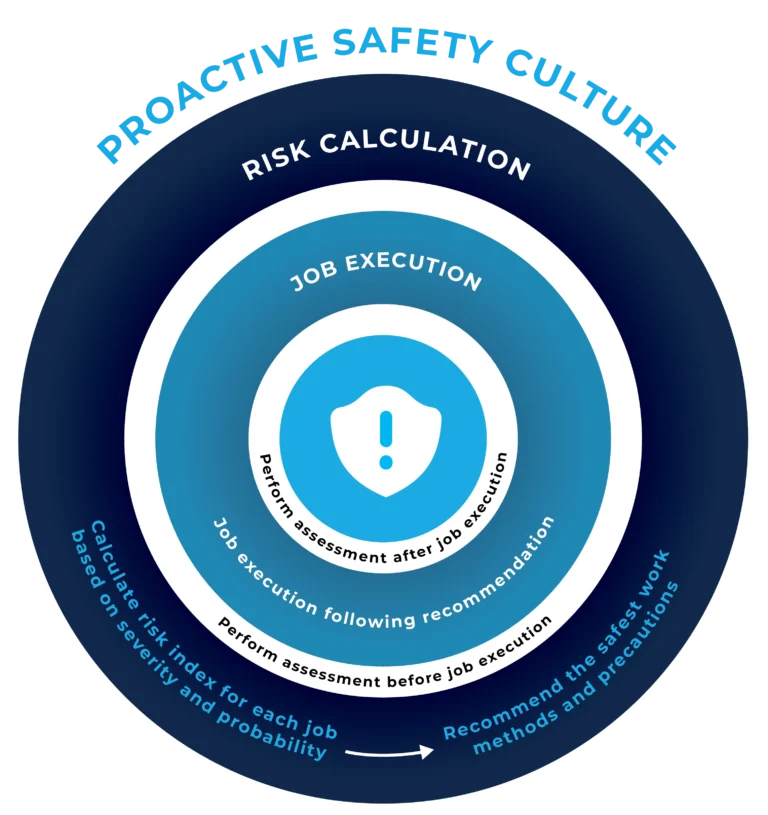
Risk management helps you guarantee the health and safety of the crew on board your ships. SERTICA’s Risk Assessment module gives you a systematic way to assess risks and prevent them with control measures, by integrating risk assessment into daily operations:
- Calculate a risk index for each job based on severity and probability.
- Recommend the safest work methods and precautions.
- Perform assessments before and after the job.
- Promote a proactive safety culture through planned risk evaluation.
Learn from incidents and improve safety onboard
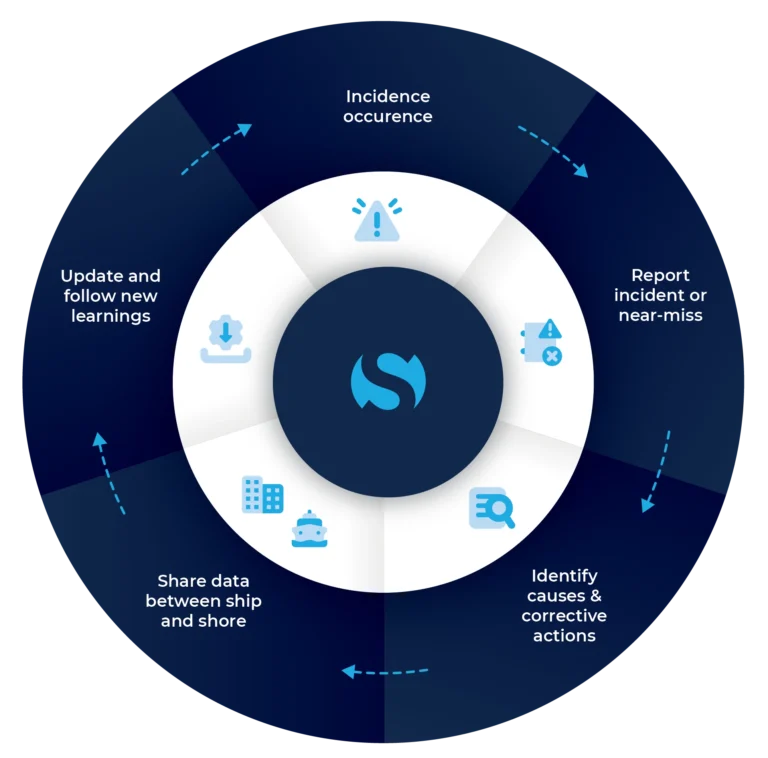
Accurate incident reporting is essential to prevent future accidents. SERTICA’s Event Reporting module enables structured reporting of all events to ensure incidents are documented and acted on across the fleet:
- Report incidents, near misses, and unsafe conditions quickly.
- Use investigation workflows to identify root causes.
- Attach evidence such as documents, photos, or videos.
- Share data transparently between vessel and shore teams.
Use the module to prevent the recurrence of incidents, investigate work-related injuries, and capture pollution events or spills – and if necessary, you can use the findings to update your procedures in the Management System.
Control critical documentation and procedures
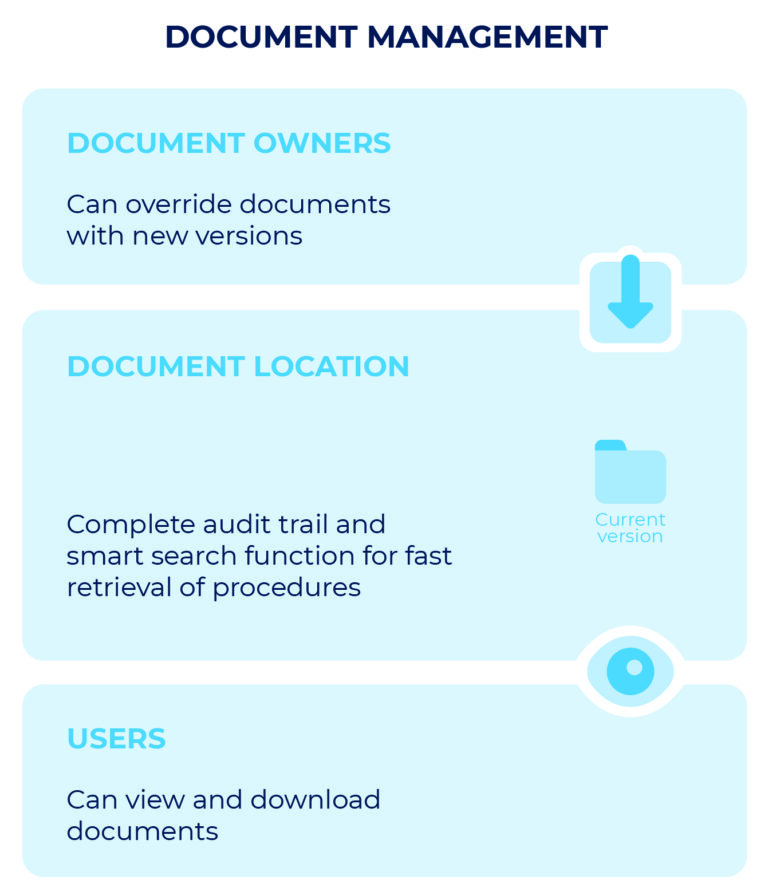
A safe and compliant vessel depends on access to the right procedures at the right time. SERTICA’s Management System module registers and controls the documents from your management systems in one place, such as your Safety Management System, Quality Management System, or Ship Oil Pollution Emergency Plan. It helps you:
- Distribute manuals and procedures automatically to vessels and departments.
- Ensure crews only see the latest approved versions, with full revision control.
- Access a complete audit trail and smart search function for fast retrieval of procedures.
- Give your crew immediate access to the procedures or protocols when needed.
Ensure compliance with hazardous material and IHM rules
Shipping is subject to some of the world’s strictest environmental regulations, and a single pollution incident can result in costly fines, reputational damage, and loss of operating licenses.
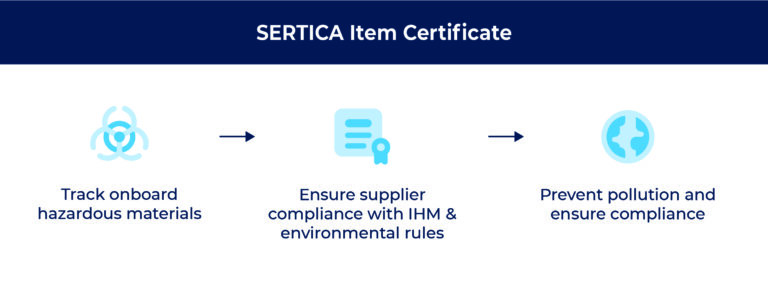
Use SERTICA’s Item Certificate module to ensure that all equipment and components have valid documentation. It helps you:
- Track exactly what is onboard your vessels and ensure compliance with Part I and III of IHM.
- Integrate certificate control directly into the procurement process to ensure suppliers provide the required documents before purchase.
- Monitor certificate status and due dates to prevent compliance gaps.
- Manage hazardous materials in line with the Hong Kong Convention and IHM requirements.
Choosing the right framework for your ship safety management
Selecting a framework is not just about terminology, it is about aligning safety management priorities with operational needs. This focus shapes your ship safety policies, crew training, and operational procedures.
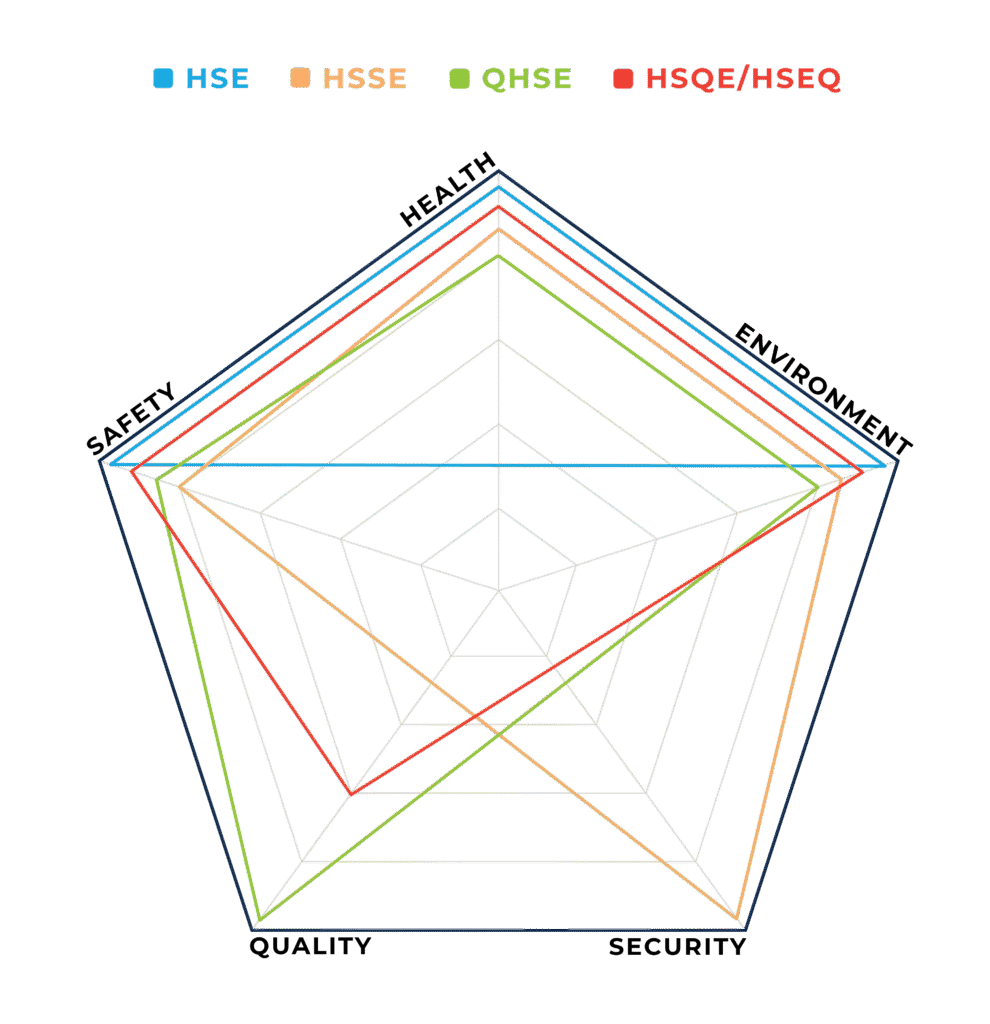
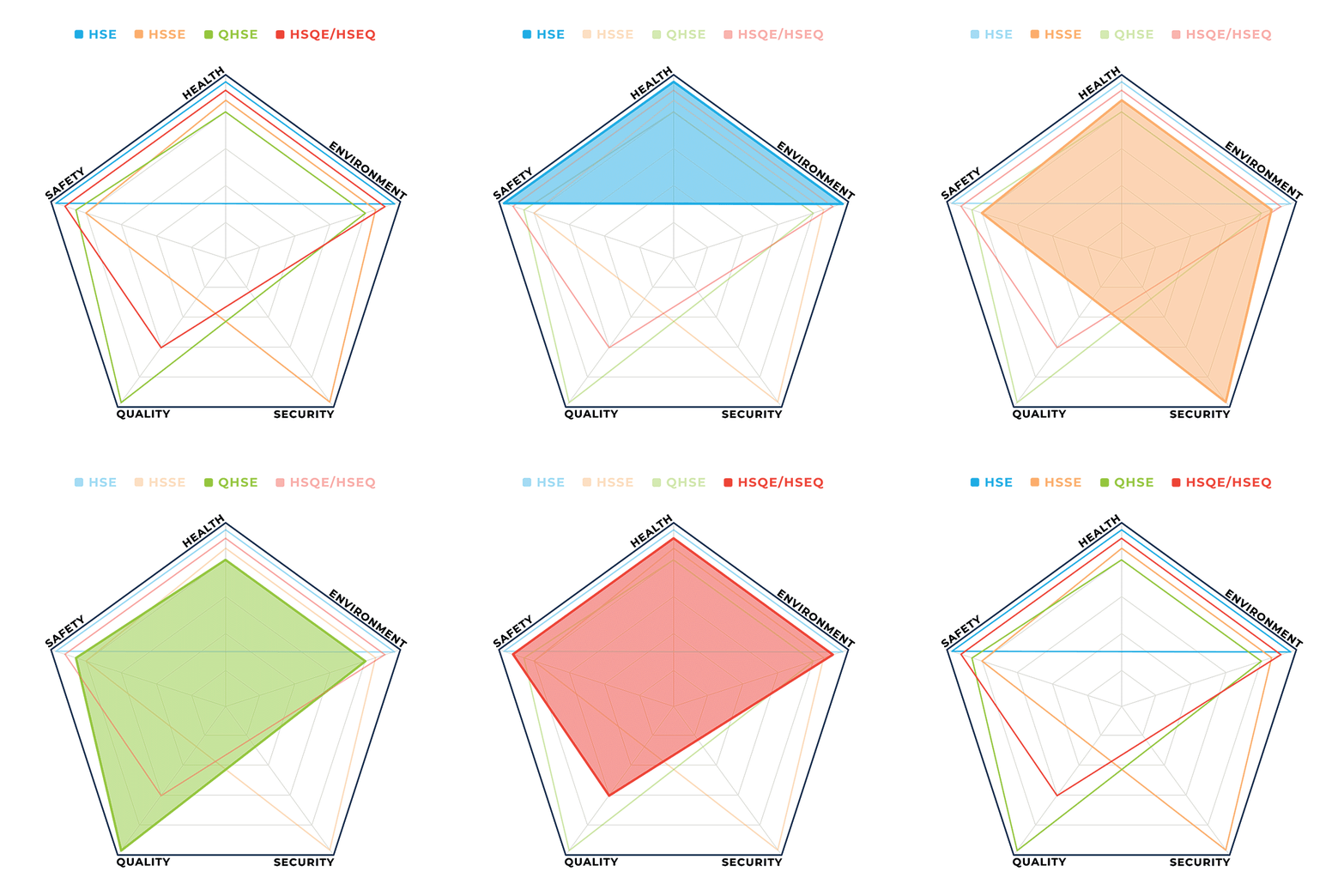
It also impacts how inspections are carried out. External auditors, port state control officers, and vetting inspectors evaluate whether your safety management aligns with international regulations and your declared framework. For example:
- HSSE-focused operations will face closer scrutiny on security protocols, ISPS compliance, and high-risk area procedures.
- QHSE-based systems will be expected to demonstrate strong quality management records alongside safety and environmental compliance.
- HSQE and HSEQ frameworks may be tested on the integration of quality and safety measures in day-to-day operations.
By implementing SERTICA HSQE, you can centralize all safety management elements, making it easier to demonstrate compliance during inspections.
If inspections are a recurring operational challenge, watch our on-demand webinar:
Webinar on Demand
Manage inspections in SERTICA
Master planning, execution, and follow ups on external audits in SERTICA, featuring insights from Tarbit Shipping and a demo of the SERTICA HSQE module.
Download

Why do you need a ship safety management system for HSE, HSQE, HSEQ, HSSE, and QHSE?
International regulations such as the ISM Code require shipowners and operators to implement a structured Safety Management System (SMS) to prevent incidents before they occur. This is not simply a compliance requirement – it is a proactive approach to protecting lives, the environment, and assets while maintaining operational efficiency.
Get a short introduction to the SERTICA HSQE modules, and learn how they can strengthen your safety management approach:
A well-implemented SMS ensures:
- Clear procedures for all safety-critical operations.
- Documented evidence to demonstrate compliance during inspections or audits.
- Efficient reporting and follow-up on incidents, near misses, and corrective actions.
- Consistent safety culture across the fleet, regardless of vessel size or type.
However, many operators still face the same challenge: ensuring that procedures are not just written but actively followed, reviewed, and improved. This is where SERTICA HSQE turns safety management from a paper-based exercise into a streamlined, digital process – making it easy to track compliance, manage documentation, and generate inspection-ready reports.
Are you confident your SMS is ready to pass an external audit?
Checklist
30 typical questions during external audit
Prepare for your next external audit with this interactive checklist created in collaboration with surveyors, compiled of their most typical questions.
Read More